The garden at The Hitt Family Farm is part of learning how to turn wooded Virginia property into a homestead that helps feed us. We’re working with the space we have, improving the soil, and discovering which crops and growing methods suit our land and our everyday lives.
Some things have grown well. Others have left us wondering what went wrong. Both are part of the story.
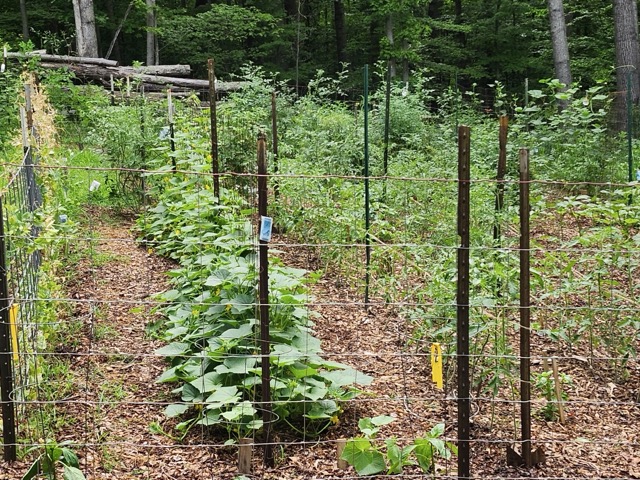
Making Room to Grow
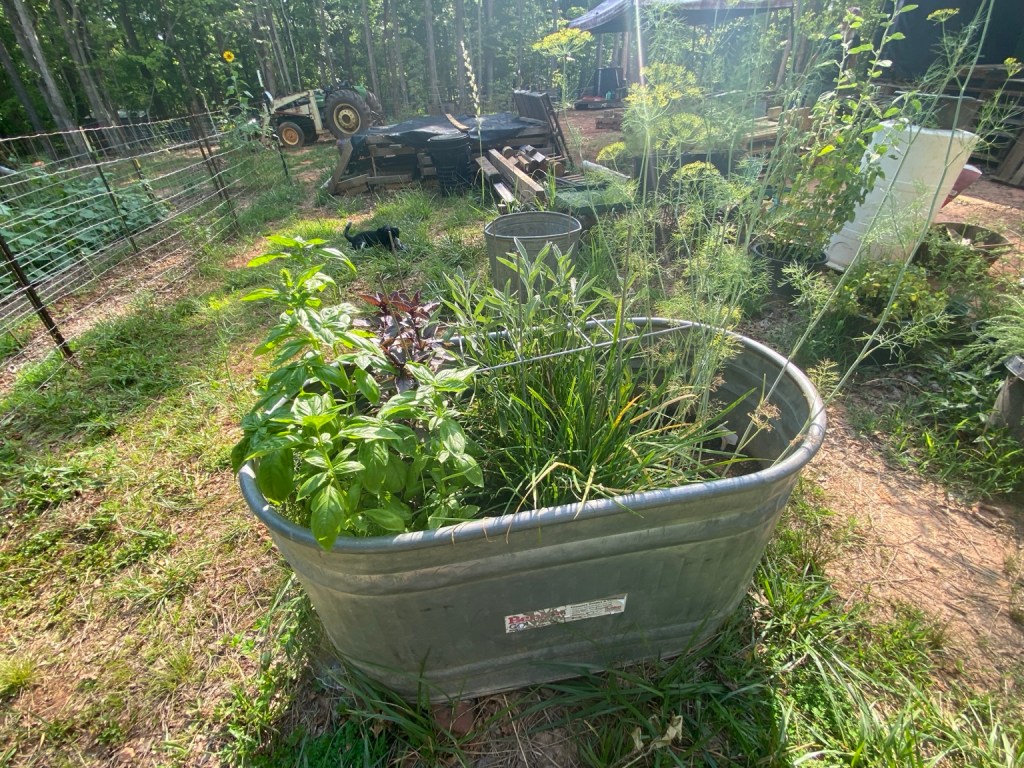
Our growing spaces include garden rows, raised beds, and containers, including repurposed tubs and troughs. The greenhouse is another part of the work we’re doing to support the garden and prepare for future seasons.
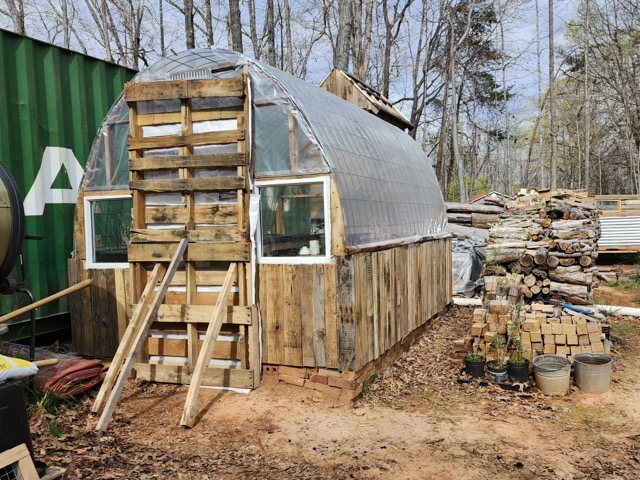
Building the garden has meant more than planting seeds. It has meant making room among the trees, putting growing spaces together, arranging water, and gradually improving what we started with.
Bill handles much of the planting, tending, and outdoor work. Lynda helps with planning and research, then turns the harvest into meals and food we can save for later. We work together as projects and harvests need us.
Vegetables for Our Table
We’ve grown tomatoes, cucumbers, okra, squash, green beans, and peppers, along with attempts at crops such as garlic and onions.
Our tomatoes have included Amish Paste, cherry, and pear varieties. Some harvests have gone straight into supper; others have become soup, relish, pickles, or dehydrated ingredients for later meals.
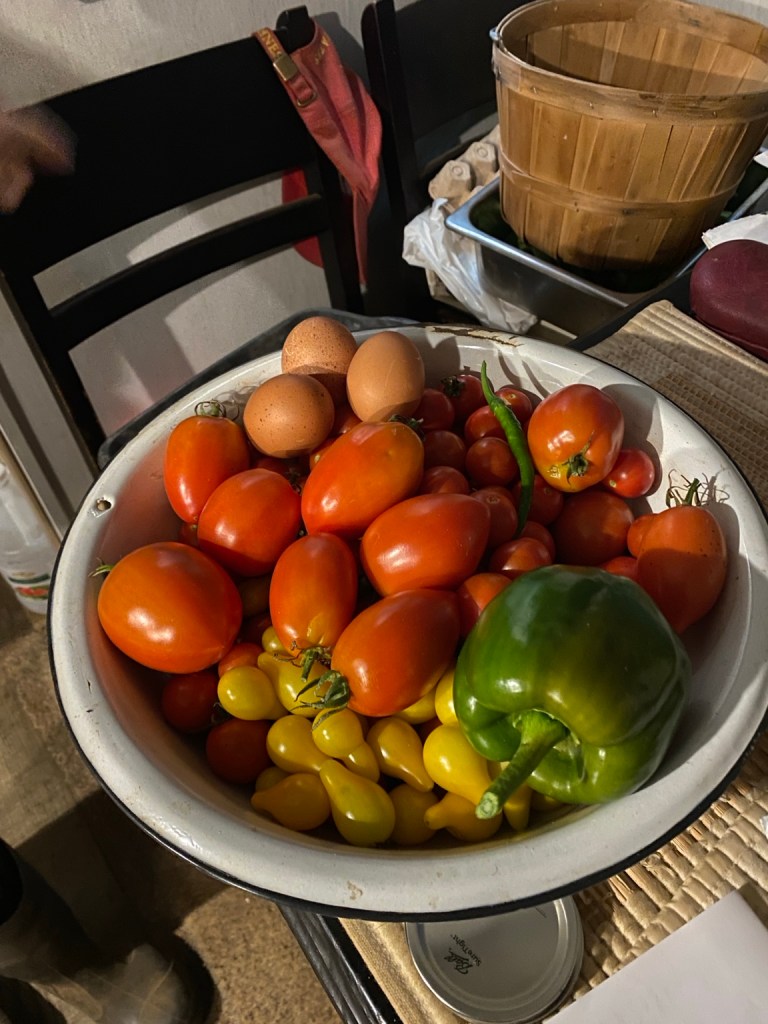
We’ve also learned that a big harvest doesn’t always mean an easy one. Cucumbers can get away from us, okra pods can become too large, and squash and beans haven’t always had the tenderness we hoped for. Those experiences help us decide what to plant again, when to harvest, and what to change.
Berries, Herbs, and Useful Plants
Alongside the vegetables, we’re growing elderberries, thornless blackberries, herbs, and useful perennial plants.
Our Adams and York elderberries are still developing. Comfrey has grown strongly, and yarrow has been prolific in a raised bed and several other places around the homestead. We’re still learning to harvest and preserve the yarrow so we can make better use of what grows here. Basil, chives, and other herbs connect the garden to the kitchen in smaller but useful ways.
We’re learning how sunlight, growing space, and the conditions along the woodland edge affect each planting. The aim is to build growing areas that become more useful over time.
From the Garden to the Farm Kitchen
Growing food is only part of the work. Using it well matters too.
Fresh vegetables become everyday meals, while canning, freezing, and dehydrating help us keep some of the harvest beyond the growing season. We’re learning which crops we enjoy eating, which preserve well for us, and how much we can realistically manage.
The garden and the farm kitchen belong to the same story: what Bill brings in helps shape what Lynda cooks and puts away.
Keeping a Record as We Learn
Our Homestead Journal will hold the dated details—what we planted, what grew, what we harvested, and what we would do differently.
We want to be able to look back at a photograph or an entry and understand what was happening that season. As the garden develops, we’ll share its progress honestly, including the disappointments and the small improvements that make the next season easier.

